Yorba Linda is one of the more affluent communities in Orange County, built across a landscape of rolling hills, deep canyons, and elevated ridgelines in the northeastern corner of the county. The city has no flat land to speak of. Every neighborhood sits on terrain that shapes its microclimate, its sun exposure, and by extension, the demands placed on the HVAC systems serving its homes. South-facing canyon lots bake in afternoon sun. Ridgeline properties catch wind. Canyon-bottom streets trap heat in ways their neighbors a hundred feet higher don’t experience.
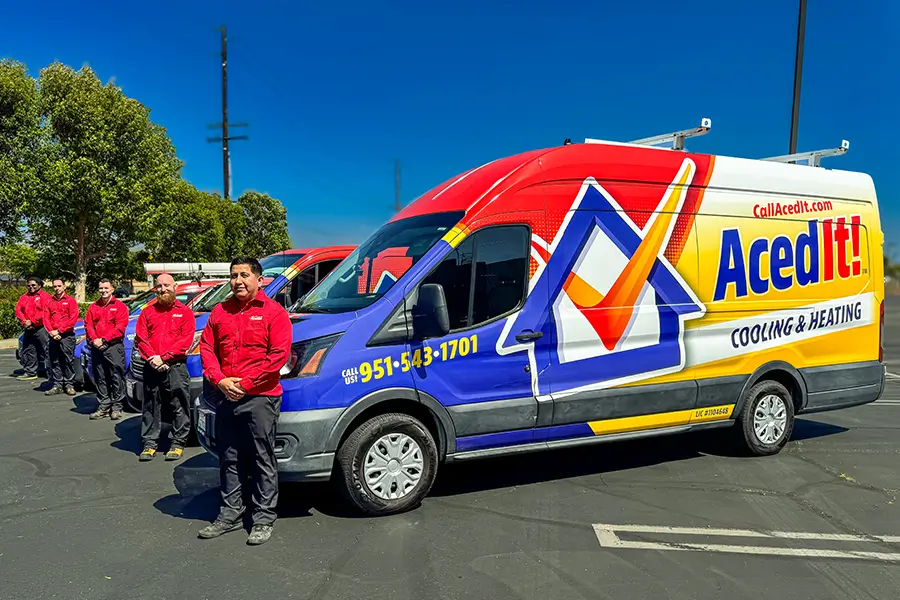
Yorba Linda’s housing spans from the older ranch-style and tract homes built through the 1970s and 80s to the larger custom and semi-custom properties that have characterized its more recent development. The city has a strong sense of community standards and homeowners here expect service companies to show up prepared and operate professionally. Aced It! Heating & Cooling serves Yorba Linda with the technical depth and honest approach this community expects.
working with caleb and his team was great we really appreciate the attention to detail and competitive pricing and super local so was speedy!
Kyle D.
★★★★★
I want to start by saying great experience and Julian was excellent. Our AC unit went out, it’s summer, we were nervous, first time homeowners not sure what to expect. We had a different company in the area come out yesterday.
Phyllis C.
★★★★★
They truly go the extra mile and were a pleasure to work with. Very professional, very efficient. They have the best technicians and we have had the good fortune to have used their expertise for over 3 years.
Robert W.
★★★★★
My experience was satisfying and informative. I appreciate the time the "Aced It" associates spent explaining my system and how it functions, it made it easier to make decisions that are beneficial to me financially and lifestyle as well.
Aurora
★★★★★
Sunday evening I find my air conditioner has a drip. I know that if I text my trusted air conditioning company I WILL get a response. Just like that I was able to make an appointment for NEXT DAY.
Blake S.
★★★★★
I ran a very thorough sales process to assess the right vendor to bring AC to my home. From their first visit, the AcedIt! guys stood out.
Latoya M.
★★★★★
His professionalism and knowledge about his job. He was super down to earth and took the tilt to exodus things to us that other technicians have not done!
Robert P.
★★★★★
In today's business market it's refreshing to find a business like Aced it! My technician was Marcus he was on time diagnosed my problem corrected it I asked for and got information on a new furnace and AC.
The homes in Yorba Linda vary considerably in size, age, and complexity. A 1,600-square-foot ranch home in an older neighborhood near Yorba Linda Boulevard has a very different HVAC profile than a 4,000-square-foot custom home on a canyon lot in the hills above. Both deserve the same quality of diagnostic and repair, and that’s what we bring to every call regardless of the home’s size or value.
Repair services we provide throughout Yorba Linda include:
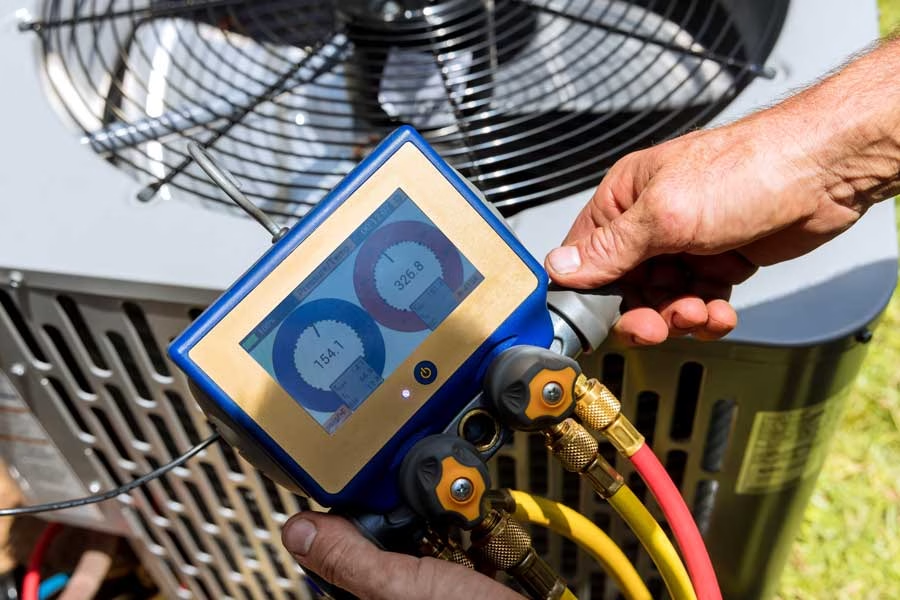
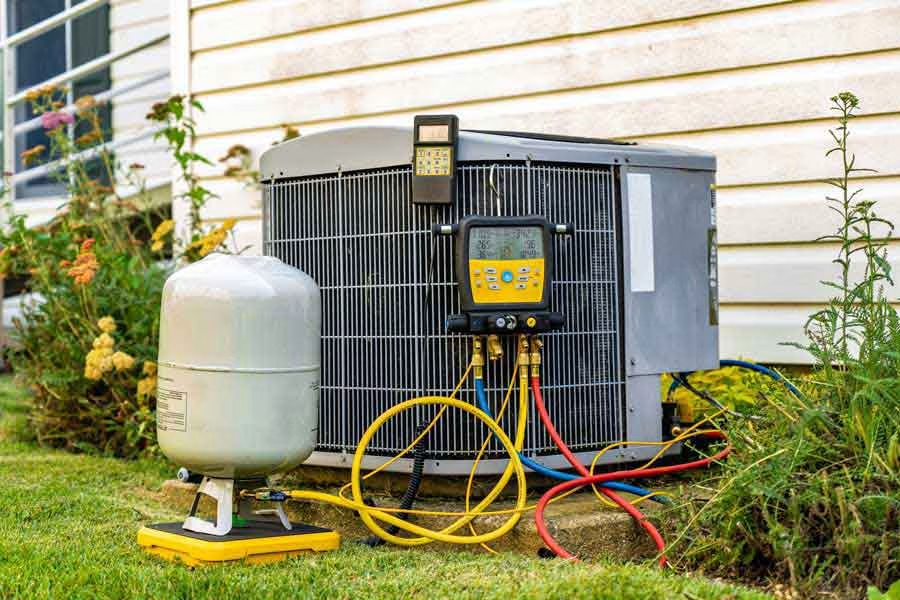
Refrigerant leak detection and recharge for systems across the age range, including the full leak location process rather than just a charge top-off that leaves the source unaddressed.
Capacitor and contactor replacement in systems experiencing the electrical component wear that accumulates through Orange County’s long warm season and the additional thermal load on sun-exposed hillside properties.
Condenser and evaporator coil cleaning and repair, particularly important in Yorba Linda’s canyon and hillside locations where dust, pollen, and plant debris from surrounding natural areas load coil surfaces more aggressively than in flat residential neighborhoods.
Blower motor and fan repair to restore proper airflow in homes where multi-zone systems and complex duct layouts make airflow distribution especially important.
Ductwork inspection and sealing, including in larger homes where extensive duct runs create more opportunity for leakage and airflow imbalance.
Zoning system diagnostics and thermostat service for the multi-zone configurations common in larger Yorba Linda homes.
Flat-rate pricing before any work starts. No ambiguity at the end of the visit.
Warning Signs Your AC Needs Attention
In Yorba Linda’s hilly terrain, AC performance issues often present as room-by-room comfort problems rather than whole-house failures, because the complex duct systems and varying sun exposure across different parts of a home create uneven conditions. Here’s what to pay attention to:
Rooms on the south or west side of the house that face afternoon sun have become noticeably harder to cool than they were in prior summers, which can indicate refrigerant loss or a system that’s lost efficiency over time.
A multi-zone system is calling for cooling in one zone but the air handler doesn’t seem to respond, which can mean a zone damper failure, a control board issue, or a wiring problem in the zoning system.
The system is producing adequate cooling in some parts of the home but not others, with the imbalance worse than it used to be, pointing to duct leakage in specific runs or a damper that isn’t opening fully.
The outdoor unit has visible corrosion on the coil fins, which in Yorba Linda’s canyon locations can develop faster than in flat areas due to moisture accumulation in lower terrain and pollen and organic debris from surrounding native vegetation.
There’s ice on the refrigerant line near the indoor unit, indicating the evaporator coil has frozen, most often from restricted airflow or low refrigerant.
The system is running frequently in short cycles without satisfying the set temperature, which stresses the compressor and usually indicates a refrigerant imbalance or a controls problem.
In a larger Yorba Linda home, these signs can be easy to attribute to normal variation until they’ve been going on long enough to become a real problem. Earlier attention is almost always cheaper than later attention.
Yorba Linda’s canyon and hillside terrain creates a specific set of operating stresses that differ from the flat-basin communities in the surrounding Inland Empire and coastal Orange County. Canyon properties experience temperature inversions and moisture pockets that accelerate corrosion on outdoor components. Ridgeline and exposed hillside homes deal with wind-driven debris and higher solar gain. And the larger, more complex homes common here add duct system variables that simpler single-story homes don’t face.
What we find behind most AC problems in Yorba Linda homes:
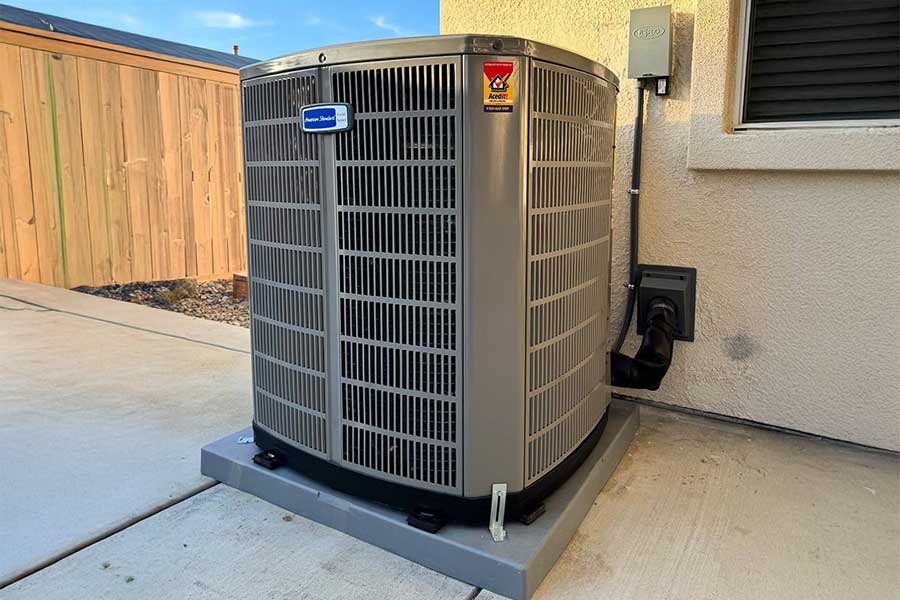
Corrosion on condenser coil fins in canyon-facing properties where moisture and organic debris from surrounding vegetation collect around outdoor units and accelerate oxidation on aluminum fins and copper connections.
Zone damper failures in multi-zone systems, where the damper actuators and control boards that manage airflow distribution fail from age or voltage issues and cause individual zones to stop responding correctly.
Duct leakage at joints and transitions in larger homes where extended duct runs create more pressure differentials and more connection points that can develop leaks over time.
Refrigerant loss from connections that have been stressed by the thermal expansion cycles of equipment running in sun-exposed hillside locations where outdoor unit temperatures run higher than flat-terrain installations.
Capacitor and electrical component wear in older systems where the combination of age and elevated operating temperatures on sun-exposed lots has accelerated degradation beyond what standard service life estimates suggest.
The terrain context is something we factor into every diagnosis in Yorba Linda, because the same failure in a canyon property and a ridgeline property often has different contributing causes.
A Day on the Job in Yorba Linda
A homeowner named Catherine called us in August from a custom home in the hills above the Yorba Linda Country Club. The house had a three-zone system and the master suite zone, which occupied the entire south-facing upper floor, had stopped responding to the thermostat. The other two zones were working fine. She’d been using a portable unit in the bedroom for a week while waiting for an appointment with another company that had cancelled twice.
Our technician found that the zone damper serving the master suite had seized in the closed position. The damper actuator had failed, likely from a combination of age and the elevated temperatures in the attic above the south-facing upper floor, and the damper blade had locked closed rather than defaulting to an open position as a properly configured damper should. The air handler and the compressor were both functioning normally. Nothing on the mechanical side had failed at all.
The actuator was replaced and the damper was tested through multiple open and close cycles before the technician left. Catherine said she’d nearly convinced herself the whole system needed to be replaced. The actual repair was a single component in the zoning system. That’s the kind of diagnostic clarity that only comes from looking at the full system rather than assuming the most expensive explanation.
Yorba Linda homeowners have high expectations and the experience to know the difference between a service company that takes the work seriously and one that doesn’t. We built Aced It! to meet that standard. We’re a Veteran-owned business run by technicians who take personal ownership of every diagnosis and every repair, and we don’t take shortcuts because the shortcut isn’t visible to the customer.
What working with us looks like in Yorba Linda:
Flat-rate pricing given before work begins, with nothing added after the fact regardless of what we find during the repair.
National Comfort Institute certification in system performance and duct design, which gives our technicians the background to work accurately with multi-zone systems, complex duct layouts, and the full range of configurations present in Yorba Linda’s varied housing stock.
Real warranties on parts and labor so the work is backed by something enforceable.
Flexible financing options for repairs or replacements that come in larger than anticipated.
The hills and canyons of Yorba Linda deserve a service company with the technical depth to work in them confidently. That’s what we show up to be.
Does the canyon and hillside terrain in Yorba Linda affect how AC systems wear?
Yes, in meaningful ways. Canyon properties often have higher moisture accumulation around outdoor units and more organic debris from surrounding vegetation, which accelerates corrosion on coil fins and connections. Ridgeline and south-facing hillside properties deal with elevated solar gain and wind-driven debris. The terrain also creates temperature microclimates that vary considerably across the city, and the solar exposure on a specific lot has a direct effect on how hard the outdoor unit has to work and how quickly its components accumulate wear.
My Yorba Linda home has a multi-zone system. Can you diagnose problems with the zoning controls?
Yes. Zone damper failures, control board issues, and thermostat wiring problems in zoned systems are something we diagnose regularly in larger Yorba Linda homes. A zone that stops responding doesn’t always indicate a problem with the air handler or compressor. Often the failure is in the damper actuator or the zone controller, and identifying that correctly saves the homeowner from unnecessary equipment repair or replacement.
How does a multi-zone AC system work and what makes it fail?
A multi-zone system uses motorized dampers in the ductwork to direct airflow to different areas of the home independently based on individual zone thermostats. When everything is working, you can set different temperatures for different parts of the house. When components fail, typically a damper actuator, a zone control board, or a thermostat, one zone may stop receiving airflow entirely while others work normally. These failures are distinct from mechanical issues with the air handler or compressor and require a different diagnostic approach.
Why is my AC bill so high in Yorba Linda compared to what friends in flatter areas pay?
Several factors contribute. Larger homes require more energy to cool. Hillside properties with significant south and west sun exposure have higher solar heat gains than flat-terrain homes of the same size. Multi-zone systems, if not properly managed, can run inefficiently. And systems that have accumulated efficiency losses from dirty coils, refrigerant issues, or duct leakage cost more to operate than a well-maintained system. A diagnostic visit can identify whether the bill reflects your home’s legitimate characteristics or a fixable system problem.
How do I find a reliable AC repair company in Yorba Linda?
Look for a company that quotes flat rates before starting work, provides clear written warranties, and is willing to explain what they found and why. Be cautious of companies that arrive and quickly recommend full system replacement without a thorough diagnostic, or that add charges after the work is done that weren’t discussed upfront. Asking for National Comfort Institute or similar professional certification is a reasonable way to verify that a technician has received training beyond basic equipment repair. We meet all of those standards and are happy to answer any questions before you schedule.