Riverside is the oldest city in the Inland Empire and one of the most architecturally layered. The neighborhoods surrounding the historic downtown core include some of the most distinctive residential streets in Southern California, from the Victorian-era homes near the Mission Inn to the early twentieth century Craftsman bungalows of the Wood Streets neighborhood and the mid-century ranch homes that spread across the city’s many hills and canyons during the postwar decades. That depth of housing history means Riverside HVAC situations are among the most varied we encounter in any community we serve.
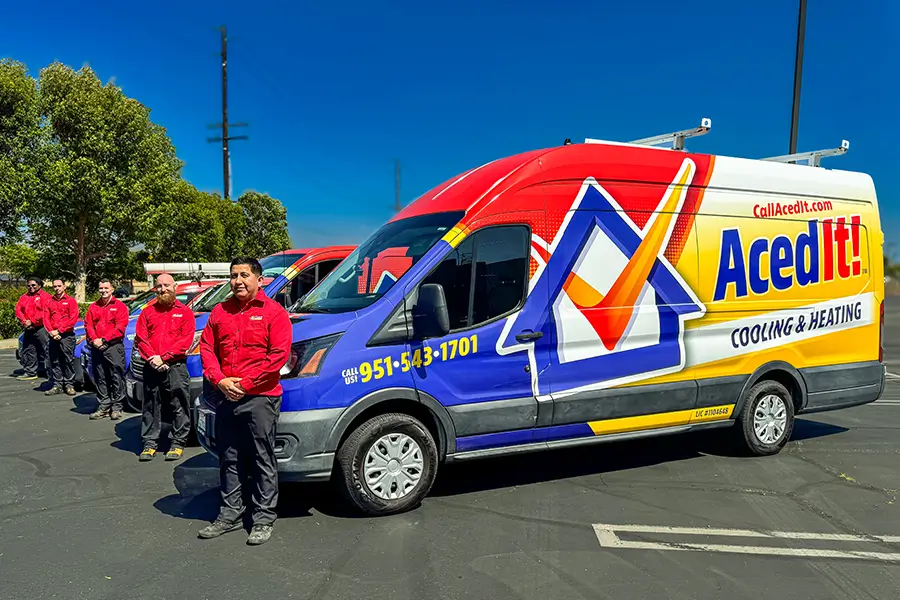
The climate here is firmly inland. Summer temperatures regularly exceed 105 degrees, and the Box Springs and Rubidoux mountain areas that bracket the city limit air circulation in ways that allow heat to build through long afternoons. Aced It! Heating & Cooling serves Riverside with honest, flat-rate AC repair and the technical depth that a city this complex demands.
working with caleb and his team was great we really appreciate the attention to detail and competitive pricing and super local so was speedy!
Kyle D.
★★★★★
I want to start by saying great experience and Julian was excellent. Our AC unit went out, it’s summer, we were nervous, first time homeowners not sure what to expect. We had a different company in the area come out yesterday.
Phyllis C.
★★★★★
They truly go the extra mile and were a pleasure to work with. Very professional, very efficient. They have the best technicians and we have had the good fortune to have used their expertise for over 3 years.
Robert W.
★★★★★
My experience was satisfying and informative. I appreciate the time the "Aced It" associates spent explaining my system and how it functions, it made it easier to make decisions that are beneficial to me financially and lifestyle as well.
Aurora
★★★★★
Sunday evening I find my air conditioner has a drip. I know that if I text my trusted air conditioning company I WILL get a response. Just like that I was able to make an appointment for NEXT DAY.
Blake S.
★★★★★
I ran a very thorough sales process to assess the right vendor to bring AC to my home. From their first visit, the AcedIt! guys stood out.
Latoya M.
★★★★★
His professionalism and knowledge about his job. He was super down to earth and took the tilt to exodus things to us that other technicians have not done!
Robert P.
★★★★★
In today's business market it's refreshing to find a business like Aced it! My technician was Marcus he was on time diagnosed my problem corrected it I asked for and got information on a new furnace and AC.
Riverside’s neighborhoods span more than a century of residential development. A home in the Alessandro Heights area may have a system installed in the last decade. A home in the Arlington or Magnolia Center neighborhoods may have been retrofitted with central air at some point in the 1970s or 80s in a structure that predated forced-air systems entirely. Each situation calls for a different diagnostic lens, and we bring both.
Repair services we provide throughout Riverside include:
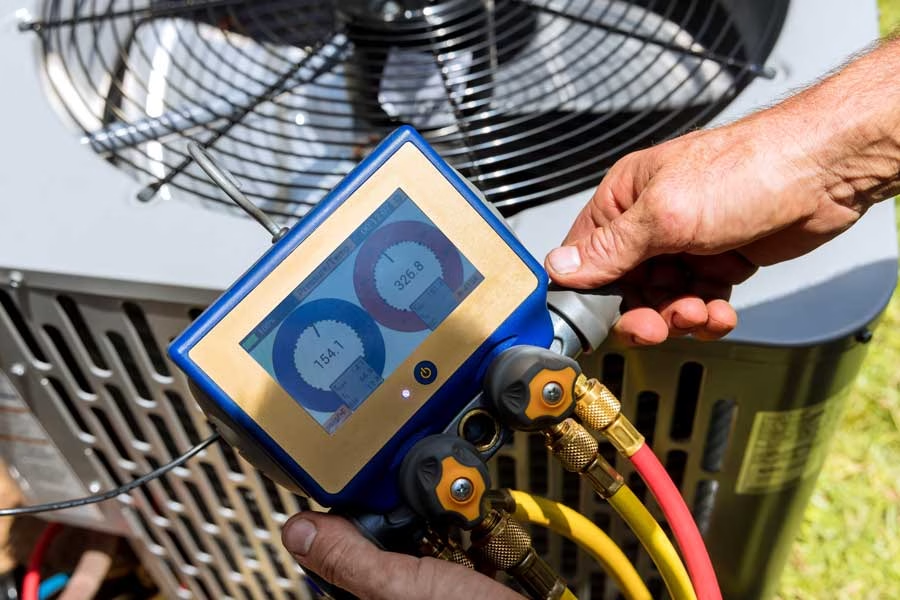
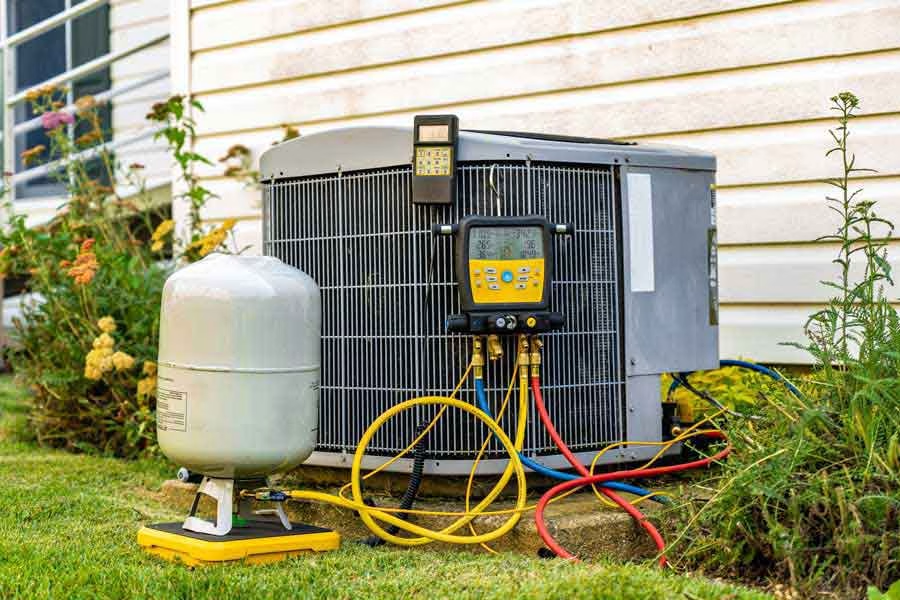
Refrigerant leak diagnosis and service for systems across the full age range, from slow leaks in aging fittings to installation-quality issues in more recently installed equipment.
Capacitor and contactor replacement in systems running through Riverside’s long and demanding cooling season.
Condenser and evaporator coil cleaning and repair to restore efficiency in the region’s dusty, high-temperature operating environment.
Blower motor and fan repair to address airflow issues across a wide range of duct configurations, from original metal duct in historic homes to modern flex installations in newer construction.
Ductwork inspection and sealing with particular attention to the retrofitted duct systems in older Riverside neighborhoods where original installation choices have had decades to create problems.
Thermostat and smart controls service for better system management and efficiency.
We quote every repair as a flat rate before we begin. The number we give you is the number you pay.
Warning Signs Your AC Needs Attention
Riverside’s topographic variation means that neighborhoods in hillside areas like Alessandro Heights, La Sierra Hills, or Canyon Crest experience different sun exposure and heat patterns than the valley floor neighborhoods near downtown or the University. Performance issues in hillside homes often trace back to condenser exposure, while older downtown-adjacent homes are more likely to have duct-related problems from aging retrofitted systems. Regardless of neighborhood, these signs are worth acting on:
The home takes substantially longer to cool down than it did last summer under similar conditions, which often indicates refrigerant loss, coil fouling, or a compressor that’s lost efficiency.
There’s an unusual odor from the vents when the system runs, whether musty from a contaminated evaporator coil or something electrical that suggests a component is overheating.
The system is running constantly but the thermostat reading isn’t dropping, a pattern that in Riverside’s heat often means the system is working against a problem it can no longer overcome on its own.
Airflow from registers has changed noticeably, either reduced volume or a change in the pattern, pointing to a duct, blower, or filter issue.
The outdoor unit starts up with a hard jolt or a sound it didn’t used to make, which usually indicates a failing start capacitor.
The system is 15 or more years old and this is its second service call within 12 months, which is often the beginning of an accelerating pattern.
Riverside’s summer heat doesn’t offer much margin when a system is already struggling. These signs are worth a call the day you notice them.
The breadth of Riverside’s housing stock creates a breadth of failure patterns that we don’t see concentrated in any one cause the way we might in a newer tract community. What connects most of the breakdowns we diagnose here is the gap between the operating demands of a Riverside summer and the maintenance investment the system has received. That gap shows up differently depending on the home’s age and location, but the underlying story is consistent.
The most common root causes we find in Riverside homes include:
Ductwork failures in the city’s large inventory of retrofitted older homes, where duct systems were installed in structures not designed for them and original compromises in routing and support have had decades to become actual failures.
Condenser coil fouling across the city’s housing range, driven by the dusty conditions common to the Inland Empire and worsened by the thermal load on hillside properties where condensers sit in direct afternoon sun.
Capacitor and electrical component wear in systems across a wide age range, from 1990s-era equipment in mid-century neighborhoods to early 2000s systems in the newer developments that expanded Riverside’s boundaries eastward and southward.
Refrigerant loss from aging connections in older systems and, less commonly, from installation quality issues in newer ones.
Compressor failure as the end point of a longer history of operating against dirty coils, marginal refrigerant levels, or electrical stress from degraded starting components.
The diversity of Riverside’s housing means we don’t come in with assumptions. We diagnose each system on its own terms.
A Day on the Job in Riverside
A homeowner named Arthur called us one afternoon in late June from his home in the Wood Streets neighborhood, one of the historic bungalow districts near the University of California campus. The house was a 1920s Craftsman that had been well maintained, and the central AC system was a retrofit that the previous owner had added in the mid-1990s. Arthur had bought the home five years earlier and the AC had been adequate but never impressive. This summer it had stopped being adequate.
The diagnostic turned up a combination of issues that explained the gradual performance decline over Arthur’s five years in the house. The evaporator coil was heavily contaminated, the flex duct connection between the air handler and the main trunk had partially separated behind the access panel in the hallway closet, and the refrigerant was slightly low from a slow leak at an indoor coil fitting. None of these was catastrophic on its own. Together they had been quietly degrading the system’s output for years.
All three issues were addressed in a single visit. Arthur said the house felt cooler after the repairs than it ever had in his five years of ownership, which suggested the problems predated his purchase. That kind of thorough visit changes how a home feels to live in. It’s the kind of outcome that makes this work worthwhile.
Riverside is a city with a long memory and high expectations for businesses that want to earn its trust. That suits us fine. Aced It! is a Veteran-owned company built on the conviction that the right way to do this work is to be honest, be thorough, and be accountable for the results. Those aren’t aspirational values for us. They’re the operating standard on every job.
What that means for Riverside homeowners:
Flat-rate pricing given before work begins, with no additions discovered after the fact.
National Comfort Institute certification in system performance and duct design, which is particularly valuable in a city like Riverside where the range of housing types and duct configurations demands real technical depth.
Genuine warranties on parts and labor that stand behind the work we do.
Flexible financing for customers facing a larger repair or replacement than they planned for.
Riverside has been here a long time and it knows the difference between a company that operates with integrity and one that doesn’t. We intend to be the former, on every single call.
My Riverside home is a historic property. Can you work on older retrofitted AC systems?
Yes, and it’s work we’re experienced with. Older Riverside homes that were retrofitted with central air often have non-standard duct configurations, tight access conditions, and equipment that required creative installation approaches. Our technicians are trained to evaluate system performance in context rather than comparing it to a standard new-construction baseline. We’ll work within the constraints of the structure honestly and tell you what’s realistically achievable with the existing installation.
How does Riverside's hill and canyon geography affect AC performance?
Significantly, in a few ways. Homes on south and west-facing hillsides receive more direct sun exposure than valley floor properties, which increases the indoor heat load and puts more demand on the system. Outdoor condenser units on those same exposures are operating against higher ambient temperatures than the official air temperature reflects. Canyon locations can have microclimates that are either hotter or cooler than surrounding areas. We account for a home’s specific location and orientation when evaluating system performance and sizing recommendations.
What's the difference between a tune-up and a diagnostic repair visit?
A tune-up is proactive maintenance performed when the system is operating, aimed at keeping it that way. It includes coil cleaning, electrical component inspection, refrigerant verification, and filter service. A diagnostic repair visit is called for when something has already changed or failed. In practice, tune-ups often identify components that are near the end of their service life before they fail, which gives you the option to address them on your schedule rather than during a breakdown.
Can I do anything to make my older Riverside home's AC more efficient without replacing the system?
Often yes. Duct sealing is one of the highest-impact improvements in older retrofitted homes, where leakage can account for 20 to 30 percent of cooling loss. Upgrading to a programmable or smart thermostat gives better control over system operation. Adding insulation to attic duct runs reduces thermal gain on the conditioned air before it reaches the living space. We can assess what’s actually limiting your system’s performance and give you a ranked list of improvements that make practical sense for your home.
Do you offer maintenance plans or just one-time repairs?
We provide both. If you’re interested in a scheduled maintenance arrangement that keeps your system in front of problems rather than behind them, we can discuss what that looks like. For Riverside’s range of housing ages and the demands of the local climate, a consistent maintenance relationship tends to produce better long-term outcomes than a repair-only approach. We’ll give you honest information about what makes sense for your specific system and home.