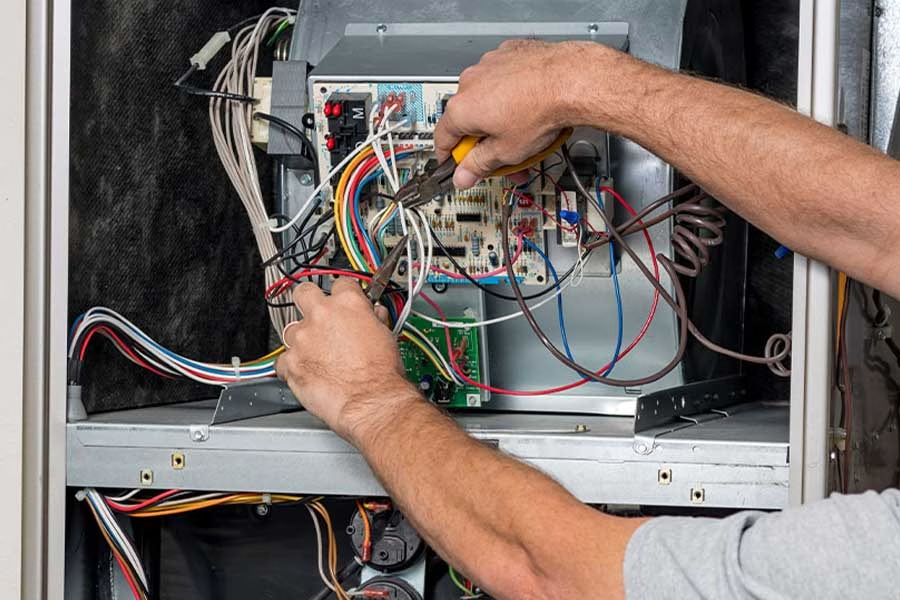
Chino Hills is one of those cities where the elevation change does a lot of the work. Streets in the lower areas sit around 700 feet while hilltop neighborhoods push past 1,800 feet, and that difference translates directly into heating demand. A furnace in a home near the Carbon Canyon ridgeline earns considerably more run time in January than one down in the flats, and homes that were built on those slopes in the 1980s and 1990s are now running original or early-replacement systems that have been accumulating wear for decades.
Aced It! Cooling & Heating is a Veteran-owned team that works with homeowners throughout Chino Hills. We’re not here to sell you something you don’t need. We’re here to fix what’s broken, explain what we found, and make sure the work holds up.
Chino Hills homes built on hillside lots often deal with issues that flat-terrain homes don’t: more temperature exposure, older duct systems routed through difficult attic geometries, and in some cases, original equipment that has never been upgraded. The combination produces some recognizable patterns when something starts going wrong.
Here are signs that warrant a call:
None of these are emergencies on their own, but all of them benefit from being looked at before winter deepens.
The hillside geography and the age of Chino Hills’ housing stock create a fairly predictable set of repair scenarios. Homes built during the city’s main growth period from the mid-1980s through the late 1990s are now in that 25-to-40-year range where original equipment either has been replaced once already or is well overdue. When we pull maintenance histories on these systems, deferred service is common.
We come prepared for what the history of this area tells us to expect, and we explain everything we find before recommending any work.
We take a system-level approach to every furnace repair, which comes from our National Comfort Institute training in performance and duct design. A lot of furnace problems aren’t just about the part that failed. They’re about what the rest of the system was doing to put that part under stress. We look at the whole picture.
What we handle for Chino Hills homeowners:
Flat-rate pricing, clear explanations, and real warranties on every job.
One of our technicians took a call from a homeowner named Michelle whose house sits near the Carbon Canyon Road corridor in the upper part of Chino Hills. She’d noticed the house wasn’t warming up the way it used to and had started leaving the thermostat set higher than she liked just to stay comfortable. The system was running, but it felt like it was working against her.
The inspection found a partially cracked heat exchanger and a blower wheel that had accumulated enough debris over the years to significantly reduce its airflow capacity. The heat exchanger issue was the priority, both for efficiency and for safety reasons. We walked Michelle through what we found, gave her options at different price points depending on whether she wanted to repair the existing system or move toward replacement given its age, and let her decide without any pressure.
She chose a repair path. We addressed the heat exchanger, cleaned and rebalanced the blower, and sealed two duct joints that were leaking in the attic while we were up there. She called back the following week to say the house was heating more evenly than it had in years. That’s the outcome we’re always going for.
Chino Hills is a community that takes its homes seriously, and homeowners here have high expectations for the contractors they let in the door. We built our company to meet those expectations without the sales tactics and upsells that make a lot of HVAC experiences frustrating.
If your furnace is struggling to keep up with a Chino Hills winter, give us a call. We’ll find out why and fix it the right way.
Higher elevation means colder temperatures and longer heating cycles. Systems in those areas accumulate wear more quickly, and any existing inefficiencies become more noticeable when the demand is higher. Regular service matters more at elevation.
Start by checking your filter, since a clogged filter can restrict airflow enough to severely limit heat output. If the filter looks fine, the issue is likely mechanical, such as a heat exchanger problem, a failing blower, or burner issues, and a technician should take a look.
If you’re experiencing unusual smells, symptoms that could indicate carbon monoxide exposure such as headaches or nausea near the heating system, or you know the heat exchanger hasn’t been inspected in several years, have a technician check it. Peace of mind is worth the visit.
Yes. Older homes often have original or early-replacement equipment, aging ductwork, and systems that haven’t been serviced regularly. Annual maintenance becomes more important, not less, as equipment ages.
That’s exactly the kind of conversation we have with homeowners every day. We look at the age, condition, and repair cost and give you honest options for both paths so you can decide based on your situation, not a sales script.
We use cookies to improve your experience on our site. By using our site, you consent to cookies.
Manage your cookie preferences below:
Essential cookies enable basic functions and are necessary for the proper function of the website.
You can find more information in our Cookie Policy and .