
When your air conditioning fails in the middle of a Corona summer, the discomfort sets in fast, especially on those triple-digit afternoons that roll through the Inland Empire from June through September. Whether you are in a home off Rincon Street or out near Green River Road, a sudden AC breakdown is never something to sit on. Understanding what typically goes wrong and knowing when to call a professional can mean the difference between a same-day fix and a full system failure.
Understanding Common AC Problems
During our service calls throughout Corona, the same categories of problems keep recurring. Inadequate cooling is one of the most common complaints and usually points to a dirty air filter, low refrigerant levels, or a failing compressor. Unusual sounds, such as rattling, hissing, or squealing, are another common sign that something inside the system needs attention, whether it is a loose component or internal mechanical wear.
Short cycling, where the unit turns on and off repeatedly without completing a full cooling cycle, is often linked to an oversized system or a malfunctioning thermostat. Water pooling around the indoor unit typically indicates a blocked condensate drain line, which can lead to secondary damage if left unaddressed. Identifying these issues early makes it much easier to communicate clearly with a technician and get the right repair done efficiently.
What to Check Before Calling for Service
Before reaching out for AC repair in Corona, CA, there are a few basic things worth verifying on your end that can help a technician diagnose the issue faster, or occasionally reveal that the fix is simpler than expected.
- Thermostat settings: Confirm the system is set to “cool” and that the target temperature is lower than the current room temperature.
- Circuit breaker: A tripped breaker is a surprisingly common culprit. Check the electrical panel and reset any tripped breakers before assuming the system has failed.
- Reset button: Some outdoor units have a reset button that can restore operation after a fault. Check your unit’s documentation if you are unsure whether yours has one.
- Air filter condition: A heavily clogged filter can trigger a system shutdown by restricting airflow to a critical level. Note its condition to share with your technician.
- Outdoor unit clearance: Check for debris, overgrown shrubs, or other obstructions around the outdoor unit, as airflow restrictions can cause overheating.
These observations are a helpful context for a service call, but they are not a substitute for a professional diagnosis. If the system is still not running after reviewing these basics, it is time to bring in a technician.
Troubleshooting: Identifying the Issue
Working in homes across Corona, we have learned that certain symptoms tend to cluster together and point toward specific underlying causes. Here is what those patterns typically indicate:
- Unusual sounds or odors: Grinding or squealing often points to motor or bearing issues. A burning smell near the air handler warrants immediate shutdown and a call for service.
- Clogged air filter: A filter packed with dust severely restricts airflow, causing the system to overheat and shut down. This is one of the most preventable causes of emergency calls.
- Blocked drainage pan: A full or overflowing condensate drain pan can trigger a safety float switch, shutting the system off entirely.
- Dirty condenser coils: Debris buildup on the outdoor unit reduces heat transfer efficiency and can cause the system to run continuously without reaching the set temperature.
- Visible leaks or corrosion: Any sign of refrigerant oil residue, rust, or corrosion around connections or the outdoor unit should be documented and reported to a technician.
Systematically noting these details before a service call helps a technician arrive prepared and often shortens the repair time considerably.
Checking Power and Thermostat Settings
Before concluding that the system itself has failed, power supply and thermostat settings are worth a careful second look. These are the first things a technician will verify on arrival, and addressing them in advance can save time.
- Power supply: Verify the system is receiving power, the disconnect switch near the outdoor unit is in the “on” position, and no breakers have tripped at the main panel.
- Thermostat settings: Confirm the mode is set to “cool,” the fan is set to “auto,” and the target temperature is set lower than the current indoor temperature.
- Thermostat batteries: If the thermostat is battery-operated, dead batteries can cause the display to go dark and the system to become unresponsive entirely.
If all of these check out and the system is still not running, the issue is likely mechanical or electrical and will require a trained technician to properly diagnose.
Inspecting the Air Filter and Vents
Based on what we see in Corona properties, air filter neglect is one of the leading causes of emergency AC calls during the peak cooling season. The region’s dry, dusty conditions, particularly during the Santa Ana wind events that move through the area each year, can accelerate filter clogging significantly compared to more humid climates.
A severely restricted filter forces the system to work harder to pull air through, raising internal temperatures and potentially triggering a high-limit safety shutoff. If a filter has not been changed in several months and appears gray or packed with debris, that information is valuable to share with a technician.
Vent inspection is equally important. Closed or blocked supply vents in individual rooms restrict system airflow from the other side of the equation. Furniture, curtains, or storage boxes placed directly in front of vents are a common issue in homes with tighter floor plans. Open vents in all rooms improve system performance and reduce stress on the equipment.
Assessing Refrigerant Levels
Refrigerant management is strictly a professional responsibility, and for good reason. Low refrigerant is not simply a matter of “topping off” the system. It is almost always the result of a leak somewhere in the refrigerant circuit, and adding refrigerant without finding and repairing the leak only delays the problem while allowing it to worsen.
Signs that refrigerant levels may be low include:
- The system runs constantly without reaching the set temperature
- Ice formation on the refrigerant lines near the indoor unit
- A hissing or bubbling sound near the outdoor unit or refrigerant lines
- Noticeably warm air coming from supply registers despite the system running
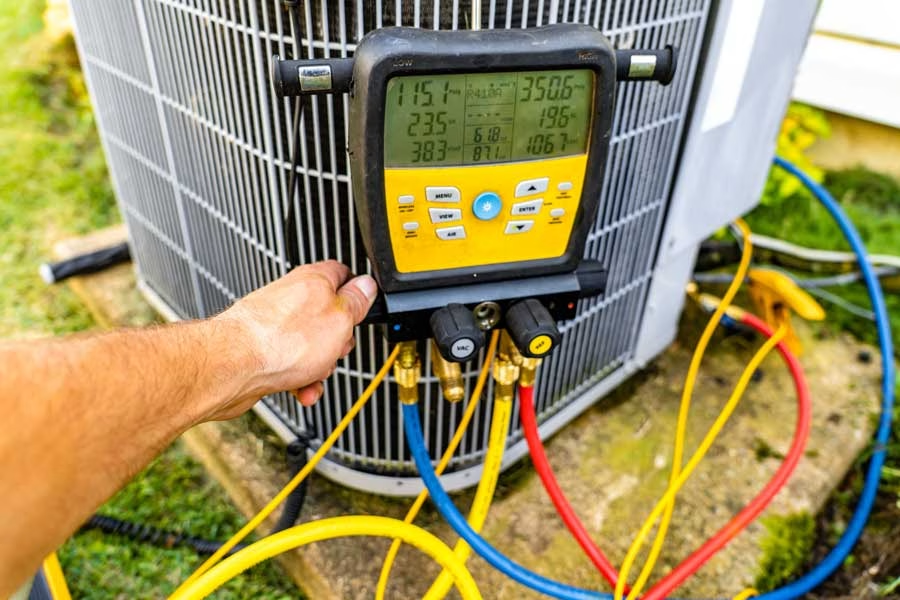
If any of these symptoms are present, shut the system off to prevent compressor damage and call for a professional assessment. A certified technician will use the correct equipment to measure system pressures, locate any leaks, and handle refrigerant in compliance with EPA regulations.
Recognizing Warning Signs of a Major Breakdown
Not every AC issue is a minor fix. In our experience responding to service calls across the Corona area, certain warning signs consistently indicate that a system is close to a significant failure rather than a routine repair.
- Grinding or metal-on-metal sounds: These often signal a failing compressor or motor bearing, both of which are major components.
- Inconsistent temperatures across the home: When some rooms cool adequately while others remain warm, it can point to failing components, duct issues, or a compressor that is no longer performing at capacity.
- Frequent cycling on and off: Rapid cycling puts enormous strain on the compressor and can significantly shorten its lifespan if left unchecked.
- Unexplained spikes in energy bills: A system working harder than it should to maintain temperature will show up on utility bills before it fails completely.
- Moisture or leaks around the unit: Refrigerant leaks and condensate drain problems both manifest as pooling liquid and should be evaluated promptly.
Catching these signs early gives homeowners more options, including the ability to weigh repair versus replacement before a complete breakdown forces the decision under pressure.
Temporary Solutions to Stay Cool
While waiting for a technician to arrive, there are practical steps that can reduce indoor temperatures and keep occupants more comfortable, especially important in a climate like Corona’s, where summer heat does not ease up much after dark.
- Strategic fan placement: Position fans near windows during cooler evening hours to draw in outside air, and reverse that airflow during the day to exhaust heat buildup.
- Window coverings: Closing blinds and curtains on south- and west-facing windows significantly reduces solar heat gain during peak afternoon hours.
- Heat-generating appliances: Avoid using the oven, dishwasher, or clothes dryer during the hottest parts of the day, as these appliances add meaningful heat to the indoor environment.
- Hydration: Staying well hydrated is the most important personal comfort measure in dry inland heat, where perspiration evaporates quickly, and dehydration can develop faster than people expect.
These measures are temporary relief strategies, not solutions. A malfunctioning AC system should be evaluated and repaired by a professional as soon as possible.
When to Call a Professional Technician
While basic observation and reporting are genuinely helpful, there is a clear line between what a homeowner should assess and what requires trained hands and proper equipment. Several situations call for a prompt professional response.
These include anything involving refrigerant, electrical components, the compressor, or the heat exchanger. Attempting repairs on these systems without the right tools and training can cause further damage to the equipment and, in some cases, create safety risks. It can also void manufacturer warranties on systems that are still covered.
A qualified technician brings the right diagnostic tools, the knowledge to interpret what those tools reveal, and the parts on hand to complete many repairs in a single visit. The value of that expertise is especially clear when a system fails on a 105-degree afternoon and comfort cannot wait until tomorrow.
Homeowners in Corona who notice their thermostat is not responding correctly and their AC is not working should mention both when calling for service, as the two issues are sometimes related.
Preventive Maintenance Tips for Your AC Unit
The emergency calls we respond to throughout Corona are often the result of deferred maintenance rather than unpredictable failure. Most AC systems give plenty of warning before they stop working entirely, and a consistent maintenance routine dramatically reduces the likelihood of a breakdown during the season when the system is needed most.
Key maintenance practices that make a measurable difference include:
- Regular filter changes: In Corona’s dusty environment, filters should typically be inspected monthly during heavy-use periods and replaced when visibly loaded with debris. Pairing filter changes with professional AC maintenance service ensures the rest of the system gets attention at the same time.
- Condenser coil cleaning: The outdoor unit accumulates dirt, pollen, and debris from the surrounding environment. Annual cleaning of the condenser coils improves heat transfer efficiency and reduces system strain.
- Condensate drain maintenance: The drain line should be checked and cleared periodically to prevent backups that can trigger safety shutoffs or cause water damage to ceilings and walls.
- Annual professional inspection: A comprehensive system inspection before the cooling season begins allows a technician to identify worn components, measure system performance, and make minor corrections before they develop into major failures.
For homes in the area considering efficiency upgrades, ductless mini-split installation is worth exploring as an alternative to aging central systems, particularly for homes with additions or rooms that have always been difficult to condition.
Aced It! Has You Covered
When your AC goes down on a hot day in Corona, you need a team that knows the area, knows the equipment, and shows up ready to solve the problem. Aced It! Heating & Cooling is a Veteran-owned HVAC company built on honest service and real craftsmanship. We use flat-rate pricing, carry the parts most common repairs require, and never push upgrades you do not need. If you are dealing with an unexpected AC failure or just want to get ahead of the next one, contact our team today and we will take it from there.
Frequently Asked Questions
How much does emergency AC repair typically cost?
Emergency AC repair costs vary depending on the nature of the failure, the parts required, and whether the work is performed during standard hours or after hours. At Aced It!, we use flat-rate pricing so you know what the repair will cost before any work begins, with no surprises at the end of the job.
Can I use my AC unit if it is making strange noises?
Unusual sounds are almost always a signal that something inside the system is not operating correctly. Continuing to run the system can accelerate the damage and turn a manageable repair into a more costly one. It is best to shut the system down and have a technician evaluate it before running it further.
What should I do if my AC is leaking water?
Shut the system off to prevent water damage from spreading and to avoid triggering additional safety shutoffs. Note where the water is pooling, whether near the indoor air handler or the outdoor unit, and share that information with your technician. The most common causes are a blocked condensate drain line or a frozen evaporator coil.
Is it safe to attempt repairs myself?
HVAC systems involve refrigerant, high-voltage electrical components, and precision mechanical parts, all of which require certified training and proper equipment to service safely. Attempting repairs without that background risks further damage to the system, personal injury, and voided manufacturer warranties. When something seems off, the right call is always to contact a qualified technician rather than troubleshoot the system yourself.
How long does an emergency AC repair usually take?
Most emergency repairs are completed within 1 to 3 hours of a technician’s arrival on site, depending on the issue’s complexity and the availability of parts. Technicians who carry common parts on their service vehicles can typically complete many repairs in a single visit.